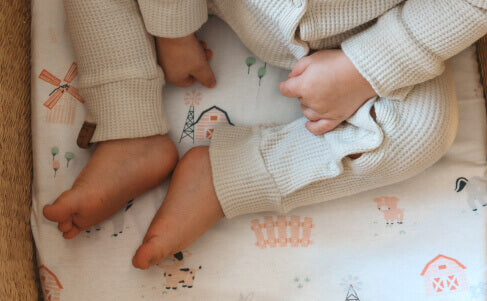


Farm Animal Nursery Themes: How to Style Your Baby's Room with Cute Crib Sheets
Putting together a farm animal nursery theme and not sure how to pull it together in a way that feels cohesive rather than cluttered? Or wondering whether the sheet pattern actually matters beyond how it looks in a photo?
The answer is yes, and not just aesthetically. A newborn's visual system is at an early stage of development, and the patterns they see in their immediate environment play a role in how that system matures. A well-chosen pattern on a crib sheet is not just a styling decision. It's a practical one.
This guide covers how to build a farm animal nursery theme that works: the colour palettes that complement farm animal designs, the furniture pairings that keep the room calm rather than busy, and what to look for in cute crib sheets for baby that actually hold their design through repeated washing.
- A farm animal nursery theme works best with a neutral base and warm accent tones: sage green, oat, barn red, and dusty yellow.
- Newborns detect light and dark more readily than colour in the first weeks: patterns with clear contrast, like dark outlines on light backgrounds, are more visually engaging.
- Cute crib sheets for baby with animal prints should use certified dyes: the same OEKO-TEX Class 1 standard that covers fabric also covers surface treatments and pigments.
- Farm-themed baby bedding holds its pattern best when made from jersey cotton with reactive dyes rather than printed surface coatings that crack or fade under repeated washing.
- Adorable crib sheet designs work visually without overwhelming the room when the surrounding palette is kept calm: one to two accent colours maximum.
- Baby nursery decor ideas for a farm theme translate directly to furniture choices: natural wood, wicker, and linen textures reinforce the warmth of the theme without adding visual noise.
- The sheet is the closest item to your baby's face and eyes: print quality and dye safety matter as much as the design itself.
Why Does Pattern Choice Matter for a Baby's Sleep Space?
Most nursery styling guides focus entirely on aesthetics. But a newborn spends 14 to 18 hours in their crib or bassinet, and the patterns in their immediate field of vision are part of what their developing visual system is processing during that time.
Children's Hospital of Philadelphia guidance on newborn senses explains that newborns can detect light and dark but cannot see all colours in the early weeks. This is why many infant books and stimulation materials use high-contrast black and white patterns. As babies develop over the first two to three months, colour vision emerges and their ability to track and respond to patterns increases.
Research published in PMC on how infant pattern preferences are shaped by visual experience found that the patterns a baby sees regularly influence how their visual system learns to distinguish patterns over time.
This doesn't mean a nursery needs to be a black-and-white flashcard. It means the patterns that are closest to the baby, particularly on sheets and crib-level items, are worth choosing thoughtfully.
What Makes a Farm Animal Theme Work Well in a Nursery?

The farm animal theme is one of the most enduringly popular nursery choices because it balances whimsy with warmth without tipping into overstimulation. Animals like cows, pigs, sheep, chickens, and horses translate naturally into simple, bold outlines that read well at close range, which is exactly what a baby sees when lying in a crib.
The theme works best when it's treated as a palette and a texture story, not a collection of every farm-related item available.
What Colour Palettes Complement Farm Animal Designs?
A farm animal nursery theme can sit within several distinct colour families. Each one creates a different mood:
|
Palette Name |
Base Colours |
Accent Colours |
Best Paired With |
|
Warm neutral |
Oat, cream, warm white |
Dusty yellow, soft terracotta |
Natural linen, wicker, pale wood |
|
Earthy and grounded |
Sage green, warm grey |
Olive, clay, warm brown |
Oak or walnut furniture, cotton rope details |
|
Classic farmhouse |
White, cream |
Barn red, black iron |
Painted furniture, galvanised metal accents |
|
Soft modern |
Warm white, pale grey |
Dusty blue-green, natural wood |
Minimalist furniture, simple textures |
How to Choose Crib Sheets That Anchor the Theme
The crib sheet is the most visible soft furnishing in the sleep space and the one closest to the baby. In a farm-themed baby bedding setup, the sheet does two jobs simultaneously: it anchors the visual theme of the room, and it provides the safe, breathable contact surface the baby sleeps on. Both functions matter, and a sheet that fails on either one is not a good choice, regardless of how it looks. For a complete checklist of what belongs in a baby's sleep space, see our guide on must-have baby sleep essentials every new mom will love.
What Makes an Animal Print Sheet Hold Its Design
The longevity of a printed crib sheet pattern depends primarily on how the dye is applied. There are two main approaches:
- Reactive dyes: The dye bonds chemically with the cotton fibres during manufacturing. Reactive-dyed sheets maintain their colour saturation and print clarity through dozens of wash cycles without fading or cracking.
- Pigment or surface printing: The colour sits on the surface of the fabric rather than bonding with the fibre. These tend to fade, crack, or soften at the edges with repeated washing.
For a sheet that's going through the laundry multiple times a week, reactive dyes are the practical choice.
Why Certified Dyes Matter as Much as Certified Fabric
OEKO-TEX Standard 100 Class 1 certification covers the finished fabric, including any dyes, pigments, and surface treatments applied to it. This is particularly relevant for printed sheets because some dyes used in textile manufacturing are restricted under Class 1 specifically for their potential to release carcinogenic aromatic amines on contact with skin.
A cute crib sheet for baby with a vibrant farm animal print that carries OEKO-TEX Class 1 certification has had both its base fabric and its print tested at the strictest infant-specific tier. A sheet with an uncertified print has not, regardless of how the base fabric is labelled. For a full breakdown of what OEKO-TEX Class 1 tests for and why it matters for babies, see our guide on why OEKO-TEX certified baby sheets are non-negotiable.
How to Choose Patterns That Work at Crib Distance?
A newborn lying in a crib sees the sheet from a distance of roughly 8 to 12 inches. At that range, large, simple outlines read more clearly than fine,e detailed patterns. A sheet with bold, clearly outlined farm animals will register more distinctly than one with a busy, small-repeat print where the individual motifs blend at close range.
This aligns with what we know about early visual development: simple, high-contrast patterns are more visually accessible to young babies than complex ones. As the baby grows and visual acuity improves, more detailed patterns become engaging. Choosing a sheet with bold, clear outlines serves the baby well from birth through the period when they can take genuine visual pleasure in the specific animals on the pattern.
How to Pair Furniture and Texture Pairings for a Farm Animal Nursery

The furniture and texture choices in a farm animal nursery theme are what give the animal motifs on the crib sheet something to sit within. The most effective farm-themed nurseries use natural materials that reinforce the warmth and organic quality of the theme without adding visual complexity.
How Versatile is Natural Wood for Nursery Decor?
Oak, pine, and walnut furniture in their natural or lightly stained finishes anchor any of the four farm theme palettes. Natural wood brings warmth and texture without pattern, which means it supports rather than competes with the animal print on the sheet.
Can Wicker and Rattan Be Used In a Farmyard Themed Nursery?
A wicker storage basket, a rattan lampshade, or a wicker nursing chair adds texture to the room without colour or pattern. In a farm-themed space, wicker reads as organic and warm, which reinforces the outdoor, pastoral quality of the theme.
What Textiles to Use in a Farmyard Themed Nursery?
Curtains, a nursing pillow cover, or a rug in plain linen or cotton let the crib sheet carry the pattern work without competition. A room where every textile has a print or texture in it reads as busy and unsettled. The farm animal pattern on the crib sheet works best when everything else in the room is relatively quiet.
Farm Animal Nursery Styling Checklist
A quick interior decorating cheat sheet!
|
Element |
What to Choose |
What to Avoid |
|
Wall colour |
Neutral base: oat, warm white, sage, pale grey |
Saturated colour that competes with the sheet pattern |
|
Crib sheet |
Bold, clear farm animal outlines on a light background; OEKO-TEX Class 1 certified |
Fine, busy repeat prints that read as texture rather than pattern at close range |
|
Furniture |
Natural wood, white-painted, or simple modern finishes |
Heavily distressed or busy painted finishes that add visual noise |
|
Textiles (curtains, rug, nursing pillow) |
Plain linen or cotton in a palette colour; one textured item (wicker, rattan) |
Multiple patterned textiles: let the sheet carry the design |
|
Wall art |
Simple line-drawn animals or watercolour prints in palette colours |
Busy gallery walls that compete with the crib sheet as the visual focal point |
|
Accent colour |
One to two accent colours pulled directly from the sheet pattern |
More than two accent colours: risks making the room feel busy rather than warm |
What are Some Practical Baby Nursery Decor Ideas Within the Farm Theme?
Setting up your farm-themed nursery is easy if you go step by step.
Should Nursery Decor Start With the Sheet?
The most reliable way to build a cohesive baby nursery decor idea is to start with the crib sheet pattern and pick up one or two colours from it for the rest of the room. If the sheet has a sage green, dusty yellow, and cream palette, those three colours become the room's complete palette. Nothing else needs to be introduced.
This approach also means the sheet you choose drives the room. It's worth spending time on that choice rather than treating the sheet as an afterthought after the wall colour and furniture are decided.
How To Use Scale Variation to Create Depth
A room where every element is the same visual size reads as flat. Vary the scale: a small, simple animal print on the sheet, a medium-scale framed print on the wall, and small wicker baskets on the shelf. The contrast in scale creates a sense of depth and intentionality that makes the room feel well-designed.
How to Keep the Area Around the Crib Calm?
The crib itself should be the calmest part of the room visually. The animal print on the sheet provides the visual interest: the wall behind the crib, the area directly above it, and the items visible from inside the crib should be quiet. A plain wall behind the crib lets the sheet be the focal point.
How Patterns Work as the Baby Gets Older
A farm animal theme chosen well holds up as the child grows. The same sheet designs that engage a newborn's developing visual system become sources of active interest and conversation for a six-month-old who can now see and reach for specific animals. By twelve months, a toddler learning words will find the named animals on a crib sheet a natural starting point for language. A theme chosen with some thought at birth has a longer useful life than one chosen purely for its look in a nursery photo. For guidance on when that transition happens, see our article on when to move your baby out of the bassinet.
A Room That Works From Day One
A farm animal nursery theme done well is warm, cohesive, and practical. The animal patterns closest to the baby should be bold enough to be visually accessible, the sheet should be made from certified materials, and printed with dyes that hold through the washing the sheets will actually go through.
The room styling, the colour palette, and the furniture all support that centrepiece. Start with the sheet. Build the room around its palette. Keep everything else calm, and the theme will do the work it's meant to do.
Farm Animal Crib Sheets That Hold Their Print Wash After Wash
At Joey + Joan, every adorable crib sheet design is made from 100% OEKO-TEX certified jersey cotton with certified dyes tested to Class 1 standards, sized precisely to specific crib and bassinet models. Each 2-pack is $29.99 and comes with a lifetime guarantee. Browse the full range of farm-themed baby bedding at joeyandjoan.com/collections/all.
Frequently Asked Questions
Q. At what age can babies actually see and appreciate the animal patterns on their crib sheet?
From birth, babies can detect the contrast between pattern and background; by two to three months, colour vision develops, and they begin to track and respond to specific shapes and motifs.
Q. Should the crib sheet match the wall colour or contrast with it?
Contrast works better than matching: a patterned sheet against a plain neutral wall lets the sheet read as the visual focal point of the sleep space rather than blending into the background.
Q. How many different animal prints can I use in one nursery?
One print, on the crib sheet, is enough to carry the farm animal theme: adding animal prints to curtains, rugs, and walls simultaneously makes the room feel busy and undermines the visual calm that supports good sleep.
Q. Is it better to choose a sheet with many different farm animals or one repeated animal?
A sheet with multiple different animals at a large, simple scale gives a baby more to look at as they develop and works better as a conversation tool when they start learning names for things.
Q. Can I use the farm animal theme in a small nursery without it feeling overwhelming?
Yes: the key is a neutral base colour, one animal print on the crib sheet, and plain textiles everywhere else, which keeps the visual interest focused without making a small space feel cluttered.
Sources
- Newborn Senses - A Children's Hospital of Philadelphia (CHOP) article on the level of development of a newborn's five senses.
- Infant Preference for Natural Texture Statistics is Modulated by Contrast Polarity - A 2015 PMC article on how infants respond to visual changes in textures.