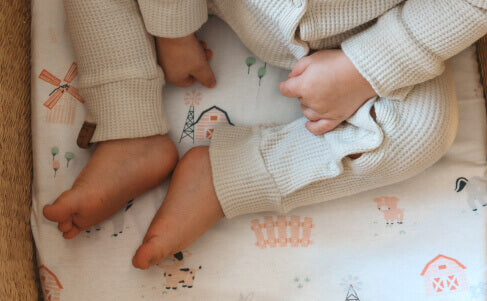
Cotton Jersey Fitted Sheets: Snug Fit
Reading Time - ...
Cotton Jersey Fitted Sheets with strong elastic band
As parents, we constantly balance the desire for a beautiful nursery with the absolute necessity for safety and practicality. Regarding the textiles on which your baby sleeps, the stakes feel particularly high. You want softness and comfort, but you also need assurance that everything from the fabric to the fit is designed with your little one's well-being in mind. This often means digging into details that are not always obvious on a product label. Take Cotton Jersey Fitted Sheets with strong elastic band, for example. We might consider the color or the pattern, but the real workhorses. The elastic band and the fabric itself. Are what truly determine how well a sheet performs, day after day.
Key Takeaways
- Safety and practicality should take priority over aesthetics when selecting textiles for your baby's sleeping environment.
- The elastic band and fabric composition matter far more than color or pattern when evaluating how well a fitted sheet will hold up over time.
- Key details about crib sheet construction rarely appear on product labels, which means parents need to look beyond surface-level marketing.
- A sheet that feels soft to the touch is only part of the equation, as proper fit and durable elastic are equally important for your baby's well-being.
Understanding these fundamental components can change how you shop for baby bedding. It is about knowing what to seek to ensure a snug, secure fit that minimizes fuss and maximizes peace of mind. We will examine the mechanics behind a sheet that stays put and the qualities of a fabric that make it ideal for your baby's sensitive skin.
What Makes a Fitted Sheet Stay Put? The Role of the Elastic Band
The primary challenge with any fitted sheet, especially on cribs and bassinets where safety standards are paramount, is keeping it securely in place. The unsung hero in this battle against shifting bedding is the elastic band. A well-designed elastic band is the difference between a sheet that constantly needs tucking and one that remains taut and smooth throughout the night. The CPSC guidelines for cribs emphasize the importance of a snug-fitting sheet that cannot be easily pulled up, and a strong elastic band is fundamental to achieving this compliance. When elastic loses its tension, the sheet can loosen, bunch up, or even slip off entirely, creating potential hazards. This is why examining the quality and design of the elastic is a non-negotiable step in evaluating any fitted sheet.
How Elastic Band Design Affects Sheet Security
The way elastic is integrated into a fitted sheet significantly impacts its ability to grip the mattress. A thin, low-gauge elastic, often less than a quarter-inch wide, might seem adequate initially but tends to lose its elasticity quickly. Research indicates that such bands can lose significant tension within as few as 20 washes, rendering the sheet baggy and prone to slipping. Conversely, wider, higher-quality elastic, often made from durable blends, offers more resilience and a stronger grip. The placement and construction of this elastic are also key. A sheet with a fully encased elastic band, running around the entire perimeter, provides more consistent tension and a more secure fit across all sides of the mattress compared to sheets with elastic only in the corners. For parents seeking reliable security, especially for bassinets like those needing Bassinet Sheets, the elastic's design is a key indicator of performance and longevity.
All-Around vs. Corner Elastic: Pros and Cons
When evaluating fitted sheets, you will encounter two main types of elastic application: all-around elastic and corner elastic. All-around elastic is sewn into the hem all the way around the sheet's perimeter. This design offers a 360-degree grip, meaning it pulls the sheet taut from every direction. Studies suggest this configuration can reduce instances of sheets popping off by up to 80% compared to corner-only elastic. The consistent tension helps prevent loosening and shifting, even with movement. Corner elastic, on the other hand, is typically found only at the four corners of the sheet. While it can provide a basic level of security, it is more susceptible to loosening, especially if the mattress is slightly thicker than average or if the sheet is pulled or tugged. The advantage of corner elastic is often a lower manufacturing cost, which can translate to a lower price point, but this comes at the expense of reliable, long-term security. For parents prioritizing a sheet that stays put reliably, all-around elastic is generally the superior choice.
Elastic Band Configurations
| Feature | All-Around Elastic | Corner Elastic |
|---|---|---|
| Coverage | 360 degrees around the entire perimeter | Only at the four corners |
| Grip Strength | Consistent and strong, providing 360° hold | Variable; can loosen at edges between corners |
| Security Against Pop-Offs | Significantly higher; reduces pop-offs by up to 80% (based on research comparing designs) | Moderate; more prone to slipping, especially with movement or thicker mattresses |
| Durability (with quality elastic) | Maintains tension longer due to distributed stress | Tension can concentrate at corners, potentially leading to premature stretching |
| Pros | Superior security, stays put reliably, snug fit, less bunching | Often more affordable |
| Cons | Can be slightly more challenging to put on initially (though modern jersey knits ease this) | Prone to popping off, may require frequent readjustment, less secure fit |
Why Pocket Depth and Mattress Thickness Matter
Beyond the elastic band itself, the "pocket depth" of a fitted sheet is a key measurement that dictates its ability to fit securely. Pocket depth refers to the height of the side panel of the sheet. A standard mattress is typically around 8-10 inches thick. For these, a sheet with at least 8 inches of pocket depth is usually sufficient. Yet, many baby mattresses, particularly crib mattresses, are thinner, often around 4-6 inches. Conversely, some crib mattresses or layered mattress systems can be thicker. For a snug fit that complies with safety recommendations and avoids dangerous looseness, the pocket depth must be appropriate for the mattress thickness. A sheet with insufficient pocket depth will not fully cover the mattress, leaving the elastic to bear all the strain and making it much more likely to pop off. Conversely, a sheet with excessive pocket depth might have excess fabric that bunches, even with strong elastic, which can also be uncomfortable or unsafe. The ideal pocket depth ensures the elastic band can properly hug the mattress edges without being overstretched or leaving gaps. For example, finding the right fit for a bassinet mattress means looking for sheets specifically designed for that model's dimensions, often requiring a particular pocket depth to ensure the snugness required for safety.
Quick Insight: A sheet's pocket depth must match your mattress thickness to ensure the elastic band can create a secure, taut fit without slipping or excessive fabric bunching. For baby cribs, this snugness is not just about comfort but a key safety requirement.
Cotton Jersey: Why This Fabric Works So Well for Fitted Sheets

When selecting baby bedding, the fabric choice is essential, directly impacting comfort, breathability, and overall sleep quality. Cotton jersey has emerged as a favored material for fitted sheets, and for good reason. Its unique knit structure lends it a natural stretch and a wonderfully soft feel, reminiscent of a favorite t-shirt. This inherent elasticity is a significant advantage for Cotton Jersey Fitted Sheets with strong elastic band, helping them conform smoothly to mattress contours and stay in place even with the gentle movements of a sleeping baby. Beyond its tactile qualities, cotton jersey offers excellent breathability, allowing air to circulate freely, which is essential for temperature regulation and a comfortable sleep environment for infants who are still developing their ability to regulate their own body temperature. Understanding these properties helps explain why cotton jersey is a smart choice for baby's bedding.
The Natural Stretch and Softness of Jersey Knit
The defining characteristic of jersey knit fabric is its single, continuous weft-knitting process, which creates loops that interlock. This construction results in a fabric that is soft, pliable, and possesses a natural, four-way stretch. Unlike woven fabrics, which have a more rigid structure, jersey knit has an inherent give. This elasticity, typically around 15-20%, is incredibly beneficial for fitted sheets. It allows the fabric to stretch and conform to the curves of a mattress without pulling taut or distorting. This means fewer wrinkles, a smoother surface for sleep, and a more secure fit, especially around corners. The softness comes from the cotton fibers themselves and the relaxed knit structure, making it gentle against a baby's delicate skin. This combination of stretch and softness contributes significantly to both the practicality of keeping the sheet in place and the comfort it provides for your little one. The resulting feel is comforting and familiar, promoting a sense of calm and security.
Breathability and Temperature Regulation for Better Sleep
For infants, maintaining a stable body temperature is essential for safe and comfortable sleep. Cotton jersey excels in this area due to the natural properties of cotton and the open structure of the knit. Cotton fibers are naturally breathable, allowing air to pass through the fabric. This prevents heat from becoming trapped between the baby and the mattress, which can lead to overheating. The jersey knit's structure, with its small loops, further improves air circulation. This breathability helps to wick away moisture, such as sweat, keeping the baby dry and comfortable. By facilitating consistent airflow and managing moisture, cotton jersey contributes to better temperature regulation, helping to prevent the baby from getting too hot or too cold. This balanced thermal environment is fundamental to uninterrupted, restful sleep, reducing the likelihood of waking due to discomfort from temperature extremes.
Pros of Cotton Jersey
- Naturally soft and comfortable, gentle on sensitive skin.
- Inherent stretch (15-20%) allows for a snug, wrinkle-free fit.
- Highly breathable, promoting airflow and preventing overheating.
- Wicks away moisture, helping to keep baby dry.
- Durable and holds up well to frequent washing.
- Easy to care for, often machine washable and dryable.
Potential Considerations for Cotton Jersey
- Can sometimes pill over time with heavy friction or frequent washing at high heat.
- May retain heat more than some very thin synthetic blends if not properly constructed or if the weave is too tight.
- Not inherently waterproof; requires a separate waterproof mattress protector.
Addressing Common Concerns: Pilling and Heat Retention
While cotton jersey is a highly regarded fabric, it is wise to address common concerns like pilling and heat retention. Pilling, the formation of small balls of fiber on the fabric surface, can occur with any knit fabric, especially with excessive friction or rough handling during washing and drying. Using a gentle wash cycle, lower drying temperatures, and avoiding abrasive materials can significantly minimize pilling. The soft, worn-in feel of jersey knit often makes minor pilling less noticeable than on other fabrics. Regarding heat retention, 100% cotton jersey is generally considered breathable and good for temperature regulation. Yet, if the knit is exceptionally tight, or if the fabric is blended with synthetic fibers that reduce breathability, it might retain more heat than a very lightweight, open-weave cotton. High-quality, 100% cotton jersey, like that used in well-made Bassinet Sheets, strikes an excellent balance, offering comforting warmth without excessive heat buildup, especially when compared to less breathable materials. These sheets are designed to provide a comfortable sleeping surface that adapts to your baby's needs.
The Engineering Behind a Strong Elastic Band: Materials, Gauge, and Construction
Beyond the visible fabric of a fitted sheet, the unseen engineering of its elastic band plays a pivotal role in its longevity and performance. Not all elastic is created equal, and understanding the materials, construction, and specifications can illuminate why some sheets remain snug for years while others lose their grip after a few washes. This is particularly important when seeking dependable Cotton Jersey Fitted Sheets with strong elastic band, which promise enduring security and a smooth fit. Competitors often overlook these technical details, but for parents who value durability and a consistently secure fit, examining the specifics of the elastic band is essential for making an informed choice.
Elastic Materials: Rubber vs. Polyester vs. Spandex Blends
The core material of an elastic band determines its initial stretch, recovery, and resistance to degradation over time. Pure rubber offers excellent elasticity but can degrade rapidly when exposed to heat, washing detergents, or even body oils, often yellowing and losing tension. Polyester, while durable and resistant to stretching, has limited inherent elasticity on its own. The best performing elastic bands for fitted sheets typically use blends, most commonly incorporating spandex (also known as elastane or Lycra). Spandex fibers provide superior stretch, flexibility, and essentially, excellent recovery. The ability to return to their original shape after being stretched. A high-quality blend, often with a significant percentage of spandex, ensures the elastic can withstand repeated washing cycles and the stress of fitting over a mattress without permanently losing its tension.
What Elastic Gauge and Width Mean for Long-Term Hold
The physical dimensions of the elastic band also contribute significantly to its holding power and durability. Elastic is often measured by its "gauge" or thickness, and its width. Low-gauge (<1/4 inch) elastic is thinner and more flexible, but it also has less inherent strength and is more prone to losing tension quickly, often within 20 washes if not of superior quality. Wider elastic bands, typically 1/2 inch or more, offer increased surface area and material, which translates to greater strength and a more persistent grip on the mattress. A wider band distributes the tension more evenly, reducing the strain on individual fibers and extending the life of the elastic. When looking for sheets that promise a secure fit, especially for crib mattresses where safety is paramount, a wider, more substantial elastic band is a key indicator of quality and long-term performance.
Reinforced Elastic and Double-Stitching: Signs of Quality
Beyond the basic material and dimensions, manufacturing techniques signal a higher level of quality in a fitted sheet's elastic band. Reinforced elastic, where the elastic band is sewn in a way that creates channels or is further secured within the hem, can prevent it from twisting or bunching. Double-stitching along the elastic casing not only adds durability to the seam itself but also helps to keep the elastic uniformly distributed around the perimeter, ensuring consistent tension. Some manufacturers even use a thicker, more durable elastic material that is specifically tested for its resistance to stretching and wear. For parents seeking sheets that truly stay put, looking for signs of reinforced construction and meticulous stitching around the elastic edge provides confidence in the sheet's ability to maintain its snug fit through countless nights and washes. These details are often indicative of a product built for durability.
Signs of a High-Quality Elastic Band
- Material Blend: Look for elastic that prominently features spandex for superior stretch and recovery.
- Width: Wider bands (e.g., 1/2 inch or more) generally offer a stronger, more durable hold.
- Gauge: Avoid very thin or low-gauge elastic, which tends to lose tension faster.
- Construction: Check for all-around elastic rather than just corner elastic for more secure coverage.
- Reinforcement: Reinforced channels or a thicker elastic material suggest better longevity.
- Stitching: Double-stitching along the elastic hem indicates more durable construction.
How to Measure Your Mattress and Choose the Right Fitted Sheet Size
Finding a fitted sheet that truly fits can feel like a puzzle, especially with the variety of mattress sizes and depths available, particularly for babies and toddlers. A sheet that is too loose can bunch up, creating an uncomfortable sleep surface, or worse, pose a safety risk by becoming dislodged. Conversely, a sheet that is too small will constantly pop off the corners. Understanding how to accurately measure your mattress and what specifications to look for in a fitted sheet is key to achieving that essential snug fit. This guide will walk you through the simple steps to ensure you select the correct size, leading to better sleep for everyone.
Step-by-Step Guide to Measuring Mattress Thickness and Dimensions
To ensure a perfect fit, begin by measuring your mattress directly. If possible, remove all bedding. For depth, place a straight edge (like a ruler or a book) across the top of the mattress and measure from the top of the straight edge down to the bottom of the mattress. This measurement is your mattress's thickness or height. Next, measure the length and width of the mattress. For standard crib mattresses, these are typically 28 inches wide by 52 inches long. Bassinet and cradle mattresses vary widely, so measuring these is especially important. Knowing these exact dimensions, particularly the thickness, is the most essential step in selecting fitted sheets that will hug your mattress securely without slipping.
Tip: For baby crib mattresses, aim for a depth measurement of 4-6 inches. For bassinets and cradles, this can range from 1.5 inches up to 4 inches or more, depending on the specific model.
Pocket Depth Requirements for Standard and Thick Mattresses
Fitted sheets are often described by their "pocket depth," which refers to the height of the side panel designed to cover the mattress. For standard adult mattresses, which are commonly 8-10 inches thick, a pocket depth of at least 8 inches is usually recommended. Yet, for cribs and bassinets, the requirements differ. Crib mattresses are often around 6 inches thick, so a sheet with a pocket depth of 6-8 inches is generally ideal for a snug fit. Thinner mattresses, common in some bassinets or cradles, might require pocket depths as low as 3-5 inches. If a sheet's pocket depth is too shallow for the mattress thickness, the elastic band will be overly stretched and unable to create a secure grip, leading to pop-offs. Conversely, a pocket depth that is too deep can result in excess fabric bunching, even with a strong elastic band, which is undesirable for a smooth, safe sleep surface.
Why Custom-Fitted Sheets (Like Joey & Joan) Beat One-Size-Fits-All
While "one-size-fits-all" can be convenient for some items, it often falls short regarding fitted sheets, especially for specialized baby bedding. A standard crib sheet might fit some crib mattresses but not others, and it will almost certainly not fit a bassinet or playard mattress correctly. These "one-size" options rely on very deep pockets and very strong, all-around elastic to try and accommodate a wide range of sizes, but this can still lead to excess fabric bunching on smaller mattresses. Custom-fitted sheets, designed for specific mattress dimensions and depths such as the offerings from Joey & Joan, eliminate this guesswork. For example, their range of Bassinet Sheets are crafted to fit particular bassinet models precisely. This ensures the sheet hugs the mattress precisely as intended, maximizing the effectiveness of the strong elastic band and the quality jersey knit fabric for a consistently smooth, secure, and comfortable sleep surface. This tailored approach provides peace of mind that the sheet is fitted correctly for optimal comfort and safety.
Caring for Your Fitted Sheet to Preserve Elastic and Fit

Investing in quality bedding for your little one means wanting it to last. While the initial comfort and snug fit of new sheets are wonderful, proper care is essential to maintain those qualities over time. The elastic band, the fabric's integrity, and the overall shape of your fitted sheet are all susceptible to wear and tear from daily use and laundering. By adopting specific care practices, you can significantly extend the life of your sheets, ensuring they continue to provide a secure and comfortable sleep surface for your baby. This approach helps maximize the value of your purchase and reduces the frequency with which you need to replace bedding, making life a little simpler for busy parents.
Washing and Drying Practices That Extend Elastic Life
The way you wash and dry your fitted sheets has a direct impact on the elasticity and fabric durability. To best preserve the integrity of the elastic band and the cotton jersey fabric, opt for a gentle wash cycle using cool or warm water, rather than hot. Hot water can degrade elastic fibers more quickly and set in stains. Use a mild detergent free from harsh chemicals or brighteners, as these can also weaken fibers over time. When it comes to drying, the most essential advice is to avoid high heat. Tumble dry on a low heat setting or, even better, air dry the sheets whenever possible. Air drying prevents the excessive shrinkage and heat damage that can occur in a hot dryer, which are primary culprits in compromising elastic tension. For parents seeking reliable, long-lasting bedding, like the specifically designed Bassinet Sheets, these gentle methods are key to preserving their performance.
Why Fabric Softener and High Heat Are Enemies of Elastic
Certain common laundry products and practices can inadvertently shorten the lifespan of your fitted sheets, particularly their elastic components. High heat, whether from hot water washes or high dryer settings, is a primary enemy of elastic. Heat causes the rubber or spandex fibers within the elastic band to break down prematurely, leading to a loss of stretch and a weakened grip. Similarly, fabric softeners, while making clothes feel softer, can leave a coating on fabric fibers. This coating can interfere with the natural breathability of cotton jersey and, more importantly, can degrade the elastic fibers over time. The chemicals in some softeners can react with the elastic material, causing it to become brittle and lose its elasticity faster. Thus, it is advisable to avoid fabric softeners and always use the lowest effective heat setting for washing and drying to protect the elastic and fabric of your sheets.
Care Practices That Protect Elastic and Fabric
- Wash in cool or warm water (never hot).
- Use a mild, bleach-free detergent.
- Tumble dry on low heat or air dry.
- Wash sheets separately or with like-fabric items.
- Avoid fabric softeners and dryer sheets.
- Fold and store sheets neatly when not in use.
Practices to Avoid
- Washing in hot water.
- High heat tumble drying.
- Using fabric softeners or harsh detergents.
- Washing with abrasive materials (e.g., zippers, velcro).
- Bleaching (unless specifically recommended for a stain and tested on fabric).
When to Replace a Fitted Sheet: Signs of Elastic Fatigue
Even with the best care, elastic bands will eventually lose some of their tension. Recognizing the signs of elastic fatigue is important for maintaining a secure fit and ensuring safety, especially in cribs and bassinets. The most obvious indicator is when a fitted sheet consistently pops off the mattress corners, even after being properly fitted. If you find yourself constantly re-tucking the sheet, or if it bunches up significantly during the night, the elastic is likely stretched out. Other signs include a visibly slackened or loose elastic band along the edge of the sheet, or fabric that feels overly baggy and no longer hugs the mattress snugly. For Cotton Jersey Fitted Sheets with strong elastic band, a longer lifespan is expected, but no elastic is permanent. When a sheet no longer provides the secure, taut fit required for comfort and safety, it is time to consider replacing it. This is also true for specialized bedding like Bassinet Sheets; if they no longer fit securely, they should be retired.
Key Takeaway: Gentle washing and drying are essential for preserving the elasticity and fabric quality of your fitted sheets. High heat and fabric softeners are the primary enemies of the elastic band, leading it to lose tension and fit prematurely. Watch for consistent popping off, bunching, or visible slackening as signs it is time for a replacement.
References
Frequently Asked Questions
What do you call a bedsheet with an elastic band?
A bedsheet with an elastic band is commonly called a fitted sheet. The elastic is sewn into the edges, allowing it to hug the mattress snugly for a secure fit. This design is especially important for baby bedding to ensure it stays in place.
Is cotton jersey good for baby bed sheets?
Yes, cotton jersey is a good choice for baby bed sheets due to its softness and breathability, which are beneficial for sensitive skin. The knit construction gives it a comfortable stretch, similar to a favorite t-shirt, making it gentle and cozy for your little one.
What's the difference between 100% cotton and 100% jersey cotton?
100% cotton refers to the fiber content, meaning the material is made solely from cotton. 100% jersey cotton specifies that the cotton is constructed using a jersey knit, which gives it a smooth, stretchy feel and a soft texture. So, jersey cotton is a type of 100% cotton fabric.
Why is the elastic band so important for baby sheets?
A strong elastic band is essential for baby sheets to maintain a snug fit on the mattress, which is a key safety consideration. It helps prevent the sheet from loosening, bunching up, or slipping off, reducing potential hazards and ensuring the bedding remains smooth and secure throughout the night.
What makes a fitted sheet stay put on a crib mattress?
A fitted sheet stays put primarily due to its elastic band and proper pocket depth. A well-designed sheet features a strong, all-around elastic that grips the mattress perimeter, combined with a pocket depth that matches the mattress thickness. This ensures a taut, secure fit that resists shifting.
What is the benefit of all-around elastic versus corner elastic on fitted sheets?
All-around elastic provides a 360-degree grip around the entire perimeter of the mattress, offering superior security and reducing the chance of sheets popping off. Corner elastic only secures the four corners, which can be less reliable, especially with movement or thicker mattresses, potentially leading to loosening.