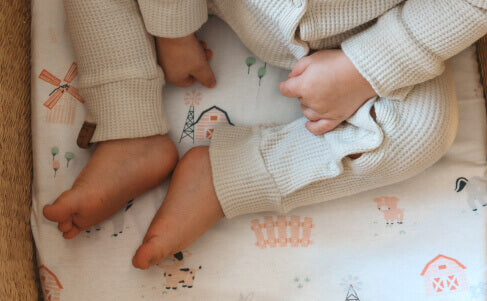


Do Bassinets Need Sheets? Safety & Comfort Explained for Babies
If you're setting up a bassinet for the first time, you might be wondering: Does it actually need a sheet, or is the mattress fine on its own? You do. A fitted sheet is an essential part of a safe and comfortable baby sleep setup.
But there's more to it than just tossing any sheet on there. The type of sheet matters, the fit matters, and understanding why it matters will help you make smarter choices for your newborn's sleep space.
- Here's everything you need to know about bassinet bedding rules, straight from the safety guidelines and the reality of life with a newborn.
- Yes, bassinets need a sheet, specifically a fitted sheet designed for your bassinet's mattress size.
- Safe sleep guidelines recommend a firm, flat surface with only a fitted sheet. Nothing else should be in the sleep space.
- Skipping the sheet doesn't make the sleep space safer. It often leads to parents adding unsafe alternatives like blankets.
- Sheets protect the mattress, keep the baby comfortable, and make hygiene management much easier.
Loose sheets, pillows, bumpers, and blankets are all unsafe and should never go in a bassinet.
Do Bassinets Actually Need a Sheet?
Yes! For many reasons, safety being one of them.
The Safety Case for Using a Fitted Sheet
A fitted bassinet sheet isn't just about comfort. It's about maintaining a safe, hygienic sleep environment. MedlinePlus advises that babies sleep on a firm, flat surface covered with a fitted sheet and nothing else. That sheet acts as the one acceptable layer between the baby and the mattress.
A well-fitted sheet stays in place, lies completely flat, and doesn't create any loose fabric that could bunch near a baby's face.
What Happens If You Skip the Sheet?
Leaving the mattress bare might seem like the simpler or even safer choice. In reality, it creates two problems:
- Hygiene becomes a nightmare. Without a sheet, every spit-up, diaper leak, or sweat patch goes straight into the mattress. Mattresses are much harder to clean than sheets. A soaked mattress can harbour bacteria and mold.
Parents improvise. When a bare mattress feels too rough or cold, it's tempting to add a blanket or towel. These are significant safety hazards for a sleeping newborn.
Here's how the two scenarios compare:
|
Aspect |
With a Fitted Sheet |
Without a Sheet |
|
Comfort |
Soft surface against the baby's skin |
A bare mattress can feel stiff and rough |
|
Hygiene |
The sheet absorbs moisture, making it easy to wash |
Mattress absorbs spit-up and sweat, making it hard to clean |
|
Safety |
Fitted sheet lies flat with no loose fabric |
Some parents add blankets to compensate, which is a serious risk |
|
Skin health |
Breathable fabric reduces irritation |
Bare mattress material may irritate sensitive newborn skin |
|
Practicality |
Quick swap after accidents |
The entire mattress needs drying or replacing after soiling |
What the Safe Sleep Guidelines Actually Say
It’s less complex than you would think.
The Rules That Apply to Bassinet Bedding
Safe sleep guidance is consistent across major health organisations. The WHO and national health bodies align on the core principle: a baby's sleep surface should be firm, flat, and free of soft objects.
For bassinet bedding specifically, that means:
- One fitted sheet, sized for the bassinet mattress
- No additional padding, liners, or inserts except a mattress protector.
- Nothing is placed over or around the baby while sleeping
- A firm mattress that doesn't indent when the baby lies on it
- Why Fitted Sheets Are the Only Safe Option
Not just any sheet will do. A flat sheet, a sheet that's too large, or one that's worn and stretched can all shift during the night and create a loose-fabric hazard. The sheet needs to:
- Fit the exact dimensions of the bassinet mattress
- Have a strong, secure elastic that grips all four corners firmly
- Lie completely flat with no wrinkles or bunching
- Be made from breathable fabric like cotton or muslin
If a sheet is popping off corners or sitting loosely on the mattress, replace it. A poor-fitting sheet is a safety issue, not just an inconvenience.
Comfort and Hygiene: The Other Reasons Sheets Matter
Keeping Baby Comfortable Through the Night
Newborns have extremely sensitive skin. A bare mattress surface, even a good quality one, can feel rougher and less breathable than a soft cotton sheet. A fitted sheet creates a gentle buffer that's more comfortable against delicate skin.
Temperature regulation is also a factor. The Mayo Clinic notes that newborns struggle to regulate their own body temperature in the early weeks. A breathable cotton sheet helps manage surface warmth without trapping heat the way synthetic materials can.
How Sheets Help With Hygiene
This is one of the most practical reasons to always use a sheet. Newborns are messy. Spit-up, diaper leaks, and sweat happen constantly. A sheet takes the hit, so the mattress doesn't have to.
- Sheets can be pulled off and washed quickly after an accident
- A clean sheet back on means the bassinet is ready to use again within minutes
- The mattress stays dry and free from bacteria that thrive in damp conditions
- Regular sheet washing reduces allergens and dust mites that can irritate a newborn's airways
This is also why having multiple sheets on hand matters. You'll want a fresh one ready to go at all times. For a full breakdown on how many to stock up on, take a look at our guide on how many bassinet sheets you really need.
What Not to Put in a Bassinet:
Here's a quick reference for what belongs in a bassinet and what doesn't:
|
Bedding Item |
Safe? |
Why |
|
Fitted bassinet sheet |
Safe |
Lies flat, no loose fabric, easy to wash |
|
Waterproof mattress protector |
Safe |
Protects the mattress, used under the sheet |
|
Loose blankets |
Not safe |
Suffocation and entanglement risk |
|
Pillows or positioners |
Not safe |
Can obstruct airways and restrict movement |
|
Bumpers or padding |
Not safe |
No proven benefit, documented safety risks |
|
Sheepskin or thick liners |
Not safe |
Too soft, increases suffocation risk |
|
Flat (non-fitted) sheet |
Not safe |
Can bunch up and cover the baby's face |
Safe Sleep Starts With Getting the Basics Right
Yes, bassinets need sheets, and not just any sheet. A properly fitted, breathable bassinet sheet is one of the simplest things you can do to keep your newborn's sleep space safe, clean, and comfortable.
The rules are actually pretty straightforward: a mattress protector and one fitted sheet. Get that right, keep a few spare sheets on hand, and you've covered one of the most important parts of newborn sleep essentials.
Find Soft, Safe Bassinet Sheets for Your Newborn
Looking for fitted bassinet sheets made from breathable, gentle fabrics? Browse the full collection at joeyandjoan.com and find sheets designed with safe sleep and sensitive newborn skin in mind.
FAQs
Can I use a muslin wrap as a bassinet sheet?
No. Muslin wraps aren't made to fit a bassinet mattress and won't stay securely in place. A loose muslin in the bassinet is a suffocation risk. Always use a sheet specifically designed and sized for your bassinet model.
My bassinet came with a mattress but no sheet. Is that normal?
Yes, it's common for bassinets to be sold without sheets included. They must be bought separately. Always check the mattress dimensions before buying sheets to make sure you get the right fit.
How do I know if a bassinet sheet fits properly?
A properly fitted sheet should pull taut over all four corners with no slack in the middle. The elastic should grip the underside of the mattress firmly. If you can pull the sheet up more than an inch or two from the surface, it's too loose and needs to be replaced.
Is a waterproof sheet safe to use in a bassinet?
A waterproof mattress protector placed under the fitted sheet is safe and actually a smart addition. It protects the mattress from soaking through during accidents. However, the waterproof layer should always go under the fitted sheet, never directly against the baby's skin.
Does the type of fabric matter for bassinet sheets?
Yes. Breathable natural fabrics like cotton and muslin are the best choices for newborns. They're soft on sensitive skin, regulate temperature better than synthetics, and are easy to wash repeatedly without degrading quickly.
Sources
- MedlinePlus — Safe Sleep for Babies
- Nemours KidsHealth — SIDS and Safe Sleep
- WHO — Infant and Young Child Feeding
- Mayo Clinic — Newborn Care